This checklist explains what to verify before purchasing Vision 20, especially when the promotional page discusses vision support but the complete current label should guide your decision.
Affiliate note: You can inspect the current presentation and request the complete label for Vision 20 through our sponsored link.
What to check on the label
The current sales page lists lutein, zeaxanthin, zinc, beta-carotene, lycopene, rose hips, vitamin A as retinyl palmitate, taurine, grape seed extract and bilberry. Before ordering, compare those names with a readable Supplement Facts panel and confirm every amount, serving size, inactive ingredient and allergen statement.
Save a copy of the exact label you reviewed.
Check whether amounts are listed individually or in a blend.
Compare the formula with any multivitamin or eye supplement you already use.
Do not purchase if the current label cannot be verified.
Medication and health questions to ask first
Show the complete label to an optometrist, doctor or pharmacist if you take medication, manage diabetes or blood-pressure concerns, have an eye condition, or are preparing for surgery. Ingredient names alone do not reveal whether a combination suits your situation.
Do not self-treat flashes, a curtain-like shadow, sudden blurred vision, eye pain or a rapid change in sight. Seek urgent professional assessment for warning signs.
A simple ritual to pair with it
Use a seven-day eye-comfort log before changing anything: note screen hours, outdoor time, sleep and dryness or strain. Continue prescribed glasses, drops and examination schedules. If you later try the product, follow only the verified label directions.
Why this deserves a structured ritual
Lighting, screens, sleep and existing eye conditions can all change how vision feels. A short baseline helps you discuss symptoms clearly without attributing every change to a supplement.
This is general wellness information, not medical advice, and the site may earn a commission through affiliate links.
This checklist reviews the ingredients and directions currently presented for DentiLock, plus the dental and medication questions worth asking before purchasing an oral-wellness supplement.
Affiliate note: The current product information for DentiLock can be reviewed through our sponsored link.
What to check on the label
The product page lists zinc as zinc-L-carnosine, xylitol, cranberry powder, guava fruit powder, honey granules, fructooligosaccharides and magnesium stearate. It recommends one tablet daily. Confirm that the delivered bottle matches those details before taking it.
Check the serving size and zinc amount.
Review sweeteners and inactive ingredients.
Note that honey granules mean the formula may not suit a strict vegan routine.
Keep xylitol-containing products safely away from dogs.
Medication and health questions to ask first
Ask a dentist, doctor or pharmacist to review the full label if you use prescription medication, take another zinc supplement, have digestive sensitivity, or manage a condition affecting your teeth, gums or immune system.
Do not self-treat bleeding gums, tooth pain, swelling, loose teeth or a persistent mouth sore. A supplement must not replace brushing, fluoride toothpaste, flossing or professional dental care.
A simple ritual to pair with it
Keep the routine basic: brush twice daily, clean between the teeth once daily and record any tenderness or bleeding for two weeks. If you choose the product, follow the bottle directions without increasing the serving.
Why this deserves a structured ritual
Oral symptoms can fluctuate while the underlying problem remains. A written record and regular dental examination are more reliable than judging progress from breath or mouth feel alone.
This is general wellness information, not medical advice, and the site may earn a commission through affiliate links.
This checklist covers the ingredients presented for MoveWell Daily, the medication and allergy questions to raise first, and a simple way to track a joint-support routine after 40.
Affiliate note: You can compare the current label and package options for MoveWell Daily through our sponsored link.
What to check on the label
The sales page lists glucosamine sulfate, turmeric, MSM, chondroitin sulfate and black pepper extract. Confirm that the current bottle lists the same ingredients, then record the amount per serving and suggested daily use.
Ask what source is used for the glucosamine if you have a shellfish allergy.
Check the complete inactive-ingredient and allergen statements.
Compare the serving with any joint formula you already use.
Keep the receipt and guarantee terms with your order record.
Medication and health questions to ask first
Show the full label to a pharmacist if you take prescription medication, use blood-thinning medicine, have surgery planned, manage diabetes or have digestive sensitivity. Ingredients such as turmeric and black pepper extract deserve an interaction check rather than guesswork.
Do not use a supplement to self-treat a hot, severely swollen joint, an injury you cannot bear weight on, or sudden unexplained pain.
A simple ritual to pair with it
Choose one repeatable daily movement—such as a five-minute walk or gentle mobility sequence. For two weeks, note stiffness before movement, the activity completed and how the joint feels an hour later. Follow only the serving printed on the current bottle.
Why this deserves a structured ritual
Joint comfort changes with activity, sleep and workload. A consistent movement and symptom record is more useful than judging a product from one unusually active or inactive day.
This is general wellness information, not medical advice, and the site may earn a commission through affiliate links.
This checklist covers the ingredients currently presented for Neura, the label details worth confirming, and the health questions to ask before adding any memory supplement after 40.
Affiliate note: If you decide it fits your checklist, you can review Neura through our sponsored link.
What to check on the label
The product page highlights lion’s mane, goji, Bacopa monnieri and shilajit. Before purchasing, compare those names with the current Supplement Facts panel and note the amount per serving, serving size and whether any ingredients sit inside a proprietary blend.
Check the complete ingredient and allergen statements.
Confirm the suggested daily serving.
Look for batch, expiry and manufacturer information.
Save a photo of the label for your pharmacist.
Medication and health questions to ask first
Ask a doctor or pharmacist to review the complete label if you use prescription medication, manage a chronic condition, are pregnant or nursing, or already take another memory formula. Combining several blends can unintentionally duplicate ingredients.
Do not self-treat sudden confusion, weakness, speech changes or a rapid change in memory. Those signs deserve prompt medical assessment rather than a supplement trial.
A simple ritual to pair with it
Keep a 14-day note with four items: sleep hours, water intake, the serving taken and a one-to-five focus score. Take only the labeled amount and change one part of your routine at a time.
Why this deserves a structured ritual
Memory and concentration naturally vary with sleep, stress, meals and medication. A short written record makes it easier to discuss patterns without assuming the capsule caused every good or difficult day.
This is general wellness information, not medical advice, and the site may earn a commission through affiliate links.
A seven-minute routine is best treated as a consistency cue, not a shortcut or a complete fitness promise. This two-week tracker helps adults over 40 test whether a short movement block fits real life while respecting pain, balance, and medical limits.
Safety note: Stop if you feel chest pain, faintness, severe breathlessness, or sharp or rapidly worsening pain. If you have a heart condition, recent injury or surgery, significant balance difficulty, or exercise restrictions, ask a clinician what is appropriate before starting.
Kate demonstrates a short, repeatable movement cue with steady support nearby.
What seven minutes can—and cannot—do
A short session can make it easier to begin and can contribute to a larger activity plan. It does not replace individualized rehabilitation or prove that a branded program will deliver a particular result. The U.S. Physical Activity Guidelines provide evidence-based guidance for building activity over time; review the current federal physical-activity guidance and adapt it to your circumstances.
Build your minimum routine
Choose familiar movements you can perform with control. A simple sequence might include an easy warm-up, sit-to-stand practice from a stable chair, wall-supported pushing, gentle marching, and a relaxed cool-down. Keep a sturdy support nearby if balance is uncertain. The goal is a repeatable block, not exhaustion.
The two-week consistency tracker
Planned time: when the session should happen
Started: yes or no
Minutes completed: record the real number
Effort: easy, moderate, or too hard
Comfort: what felt fine and what needs adjusting
Next change: one practical modification
Track the routine on eight to ten days rather than demanding fourteen perfect days. On a busy day, two careful minutes can preserve the cue. On a painful or unwell day, rest or follow professional advice instead of forcing the box to be checked.
A simple ritual to pair with it
Attach the session to something that already happens: after the kettle starts, before a shower, or when the workday ends. Put shoes, a chair, or a resistance band in place ahead of time. When the cue is obvious, the routine asks for less negotiation.
Why this deserves a structured ritual
Short-workout marketing often focuses on dramatic outcomes. A tracker answers a more useful first question: can you perform the routine safely and consistently enough to build on it? Review the pattern after two weeks. If the routine was repeatedly too hard, reduce complexity. If it became easy, add time or resistance gradually within your plan.
Memory-supplement labels can look precise while still leaving important questions unanswered. This checklist helps adults over 40 compare the current bottle, prepare medication questions, and avoid treating a product name as proof of benefit.
Safety note: New, worsening, or disruptive memory changes deserve medical attention. Do not use a supplement review to self-diagnose or delay an assessment.
Kate turns a supplement label into a short list of pharmacist questions.
Start with the complete label
Serving size and servings per container
Every dietary ingredient and its amount
Any proprietary blend with undisclosed individual amounts
Other ingredients, including allergens and capsule materials
Directions, warnings, storage instructions, and responsible company
Lot number and expiration or best-by information
Use a photograph of the label on the bottle you would actually receive. Do not copy a dosage from an old review, marketplace listing, or promotional graphic. The FDA notes that dietary supplements are not approved for effectiveness before marketing and advises consumers to consult a doctor, pharmacist, or other health professional because supplements may interact with medicines or other supplements. See the FDA dietary-supplement questions and answers.
Questions to ask a pharmacist
Could any ingredient interact with my prescriptions or over-the-counter medicines?
Does it duplicate anything in my multivitamin or another supplement?
Should I avoid it before a procedure or laboratory test?
Are any ingredients unsuitable with my health conditions?
What unwanted effects should make me stop and seek advice?
Bring the full label and a complete list of what you take. “Natural” and “stimulant-free” are product descriptions, not guarantees that a formula is appropriate for every person.
A five-minute label ritual
Minute 1: Write the exact product and version. Minute 2: photograph the Supplement Facts and other-ingredients panels. Minute 3: mark any missing amounts or unclear terms. Minute 4: compare the list with your current medicines and supplements. Minute 5: write the one question you need answered before buying.
Why this deserves a structured ritual
Memory concerns can make a confident sales page feel especially persuasive. A written checklist slows the decision down and keeps the current label, the seller’s claims, your health history, and the price in separate columns. That makes it easier to postpone a purchase when information is incomplete.
Hearing changes after 40 are often gradual, which makes them easy to normalize. This checklist helps you notice patterns, know when to arrange a hearing test, and separate a useful daily ritual from supplement marketing.
Safety note: Sudden hearing loss, a rapid change, one-sided symptoms, severe dizziness, ear pain, or drainage deserves prompt medical assessment. Do not wait for a supplement or home routine to fix a warning sign.
Kate reviews a simple hearing-notes checklist before arranging professional care.
Small signs worth writing down
Turning the television up more often
Asking people to repeat themselves, especially in restaurants
Following one-to-one conversation but losing words in groups
Feeling unusually tired after meetings or family gatherings
Noticing ringing, buzzing, fullness, or a difference between ears
The National Institute on Deafness and Other Communication Disorders explains that age-related hearing loss is usually gradual and often affects both ears. Because it can creep in slowly, a short written log is more useful than relying on memory alone. Read the NIDCD overview of age-related hearing loss for its screening questions and care options.
A seven-day hearing-notes ritual
Keep one note on your phone or a small card in your bag. Once a day, record the setting, what was difficult, whether one or both ears seemed affected, and any background noise. Add recent noise exposure and new medicines or supplements, but do not change prescribed treatment on your own.
At the end of the week, circle repeated situations. Difficulty that keeps appearing in quiet conversation, on the phone, or on one side is worth discussing with a primary-care clinician, audiologist, or ENT. A proper hearing assessment can measure what a diary cannot.
When to schedule a hearing test
Arrange a routine hearing check when communication difficulties are recurring, family members notice a change, or listening effort is affecting your work or social life. If symptoms are complex, worsening, or accompanied by balance problems, ask which hearing professional is the right first stop.
Where supplements fit—and where they do not
A supplement cannot diagnose the cause of hearing difficulty and should not be described as a treatment for hearing loss. If you are comparing seller offers, use our Whispeara vs SonoVive label-first comparison. The comparison is for product research; it does not replace a hearing test.
A calmer next step
Bring your seven-day note, medicine list, and questions to the appointment. Ask what was measured, whether the change is in one or both ears, and when to repeat testing. Meanwhile, reduce unnecessary loud-noise exposure and use suitable hearing protection rather than simply turning everything up.
This is general wellness information, not medical advice. Simple Health Rituals may earn a commission through affiliate links.
Seven minutes feels manageable on a crowded day. That is the appeal of 7 Minute Ageless Body Secret. Before buying, separate the convenience of a short session from the much larger promise that a specific routine can reverse how your body ages. This review focuses on the public offer and the decisions a buyer can actually check.
Affiliate disclosure: We may receive a commission from purchases through our links, at no additional cost to you. We reviewed the public program description; we have not purchased or personally tested the paid sessions, and this article does not report personal transformation results.
What is included in the digital program?
Dawn Sylvester’s public offer describes a Quickstart Guide, program and workout manuals, a warm-up video and three digital follow-along workout videos. It also lists bonuses. The product is presented as online content rather than a physical delivery. Confirm current access, equipment needs, support and refund arrangements with the seller.
Official program artwork supplied on the vendor website. Digital artwork does not imply a physical boxed product.
The useful idea is a low-friction appointment with movement. A short session can be easier to place between ordinary commitments than an open-ended promise to exercise later. Whether this particular course provides suitable instruction for you remains a separate question.
The sales page makes anti-aging, metabolism and rapid body-change claims. We have not verified those results for this exact program. Treat them as marketing claims, not a forecast of what will happen to you. General evidence supporting physical activity does not validate every outcome advertised by an individual course.
Does seven minutes replace a full activity plan?
No single duration answers that question. CDC guidance for adults includes at least 150 minutes of moderate aerobic activity per week, or its vigorous equivalent, and muscle-strengthening work on two or more days for all major muscle groups. Short sessions can contribute, but you still need to consider their intensity, content and the rest of your week.
Seven minutes on seven days adds up to 49 minutes. That arithmetic is useful for your calendar, but it does not automatically classify the sessions as moderate aerobic activity or prove that every major muscle group is covered. Avoid comparing course titles as though minutes alone establish quality.
A seven-minute decision ritual before you buy
Minute 1 — name the obstacle. Is the difficulty starting, choosing exercises, finding space or adapting movements? A video course may address some of these better than others.
Minute 2 — check your screen. Decide where you would watch. A phone on the floor may make some demonstrations harder to follow than a larger screen at a comfortable angle.
Minute 3 — ask for a sample. Look for clear movement demonstrations, audible instructions and enough time to understand the setup.
Minute 4 — check modifications. Ask about floor work, balance demands and options relevant to your limitations. “Beginner” is not an individual assessment.
Minute 5 — check equipment. Get an explicit list. Do not assume that a short workout uses no equipment or no additional preparation time.
Minute 6 — check purchase terms. Confirm total cost, access duration, delivery, support and refund procedure. Save the terms that apply when you order.
Minute 7 — decide what success means. Choose an observable first-week goal, such as understanding the setup and attending planned sessions, rather than a promised change in appearance.
Build a week around ordinary commitments
Start with your real calendar. Find two possible practice windows and one backup window. Add setup and transition time rather than assuming the advertised workout length is the entire appointment. If moving furniture takes longer than the video, fix the room arrangement before blaming your motivation.
Attach the appointment to something dependable: after closing your work laptop, before your planned shower or after returning from a school drop-off. A good cue tells you when to start. It does not require you to finish a session regardless of illness, fatigue or pain.
Keep aerobic activity on the calendar as well. The seller’s enthusiasm for one training method does not mean you should abandon walking or another activity you enjoy. Build a combination that fits your abilities and review it with a professional when you need help adapting the plan.
Use a first-week decision log
Make five short entries after a session: what you attempted, what you understood, where you paused, any modification and what you will do next time. Keep the log about the experience of using the instruction. It should help you answer whether the course is usable, not pressure you to manufacture a positive review.
At the end of the week, compare the planned appointments with the completed ones. If you missed a session, identify the specific obstacle. An inconvenient screen position needs a practical adjustment; an unexplained painful movement needs appropriate guidance. Those are different problems and should not receive the same response.
When personalised advice matters
People with chronic health conditions should discuss suitable activity with their clinician, as the CDC advises. If a recent injury, surgery, balance problem or movement limitation affects participation, seek advice before assuming a general video is appropriate. A short session can still be challenging. Duration is not a safety rating.
Our purchase verdict
Consider this program as an optional source of short guided sessions if its demonstration style, modifications and access arrangements meet your needs. Do not purchase it on the expectation of guaranteed hormone changes or age reversal. If the seller cannot answer basic suitability questions, use a clearer source of instruction before committing.
The most useful result of this review is a decision you can explain: “The format fits my schedule and the instruction is suitable,” or “I need a different level of support.” Either is a better outcome than buying from urgency and leaving the videos unopened.
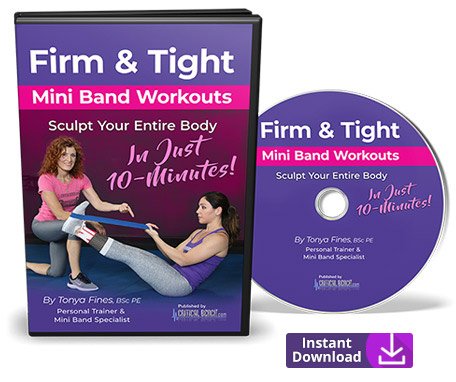
A resistance band takes up very little room. Finding a routine you can repeat, understand and adapt takes more thought. If you are considering Firm and Tight Mini Band Workouts after 40, the most useful question is whether its instruction fits your starting point and your week.
Affiliate disclosure: We may earn a commission if you buy through links in this article, at no extra cost to you. This is an editorial assessment of the public offer, not a hands-on test of the paid course or a report of personal results.
What the public offer includes
The vendor describes seven approximately ten-minute follow-along workouts covering upper body, lower body, full body and core, plus a posture workout bonus. The page advertises digital access and a mini-band offer. Confirm the current equipment, shipping charges, delivery locations, access arrangements and refund terms before paying.
Official program artwork supplied on the vendor website. Digital artwork does not imply a physical boxed product.
Our assessment: judge the instruction before the transformation promises
A short, guided format may make starting easier. However, the sales page also makes substantial calorie-burning and rapid body-shape claims. We have not verified those outcomes for this exact program. Testimonials and a refund promise do not establish how much fat an individual will lose, and buying the course is not a guarantee of a particular appearance.
A better purchase test is concrete: can you see the band position, understand the pace, pause the demonstration and choose an easier option? Ask the seller for a sample or a clear description of the beginner modifications. A confident presenter is useful only if the instruction lets you move at an appropriate level.
Five questions to answer before ordering
What equipment will I actually receive? Confirm whether bands are included, their material and resistance levels, and any extra shipping cost. Do not assume the artwork shows every item shipped.
Can I use my own band? Ask whether your existing loop size and resistance suit the exercises. Colour labels are not a reliable comparison across brands.
Can I follow the videos? Check device compatibility, captions, downloads, access duration and how to contact support.
Are there useful modifications? Find out whether sessions require floor transfers, balance without support or movements that currently bother you.
What is the total commitment? Review the checkout total and any optional extras. Save the receipt and the refund instructions that apply to your purchase.
A ten-minute planning ritual before your first session
Use this as a preparation routine, not a substitute for the course instructions or an exercise prescription. The aim is to remove practical obstacles before you begin.
Minutes 1–2: choose a clear, stable space and put the screen where you can see it without repeatedly twisting. Keep loose items and pets out of the movement area.
Minutes 3–4: inspect your band using its manufacturer’s guidance. Replace damaged equipment and check material information if you have a latex sensitivity.
Minutes 5–7: preview the session. Note any exercise you do not understand and identify a demonstrated modification or a question to ask the instructor.
Minutes 8–9: decide when you will practice and what an easier version of the session looks like on a busy day.
Minute 10: write a simple starting note: chosen session, equipment and one question you want answered.
Where short workouts fit in a full week
The CDC recommends at least 150 minutes of moderate aerobic activity weekly, or the vigorous equivalent, plus muscle-strengthening activity on two or more days involving all major muscle groups. A short workout can contribute to a broader routine; its duration alone does not tell you whether the week meets those recommendations.
For planning, make two separate calendar entries: strength practice and aerobic activity you enjoy. Then check what the chosen sessions actually cover. Repeating only one favourite lower-body video leaves a different gap from missing your walks. You do not need to solve every gap on day one; you do need to recognise it.
Track repeatability before appearance
For the first week, use a notebook with five columns: date, session, band used, modification and next-session note. Record what happened rather than what you hoped would happen. “Paused twice to replay the setup” is a useful observation. “Failed because I did not look different” is not a useful measure of instruction or habit.
Keep the setup consistent enough to compare sessions. If you change resistance, session and pace together, your notes become harder to interpret. Bring repeated discomfort or an unclear movement to an appropriately qualified professional rather than trying to work through it for the sake of completing a streak.
Who should seek individual guidance first?
CDC guidance advises people with chronic conditions such as arthritis, heart disease or diabetes to discuss suitable activity with their clinician. A paid video does not know your injury history, recent surgery or current limitations. Seek individual advice when those factors affect your ability to follow the movements. Stop a movement that causes sharp or unusual pain.
Is it worth buying?
It may be worth considering if you want organised, short video sessions and the seller answers your equipment and modification questions clearly. Hold off if you need rehabilitation, cannot access a usable demonstration or would be buying mainly because of a promised rapid transformation. Free activity planning and existing equipment may be enough to begin building your habit.
If you keep searching for your keys just as you need to leave, make the environment do more of the remembering. A designated place and a repeatable arrival cue are practical starting points. This EnduraMind companion guide focuses on that small daily problem while keeping the supplement’s claims separate from the routine.
Affiliate disclosure: This article contains affiliate links. We may earn a commission if you purchase through them, at no extra cost to you. This is an editorial label guide, not a report of personal product testing or medical advice.
Choose one missing-item problem
Start with keys, a wallet, or reading glasses—not all three. Select the item that most often delays you. Write down the actual difficulty: “I put my keys in different rooms when I get home.” That statement points to a routine you can change. “My memory is bad” is too broad to guide a small experiment.
Choose a storage spot that is easy to see and reach during your normal arrival sequence. A small tray inside a cupboard or on a suitable shelf may work. Consider who else uses the space and keep important items secure. Avoid selecting a spot simply because it looks attractive in a photograph.
Build the arrival cue
Step 1: choose the moment. Link the action to something that already happens, such as closing the door or putting down your bag. Make the instruction concrete: “When I put down my bag, I place my keys in the tray.”
Step 2: remove a competing step. If you usually carry the keys to the kitchen while checking your phone, put them away before opening a message. You are reducing an opportunity for distraction rather than trying to remember harder at the end of a busy day.
Step 3: leave a modest visual reminder. A small note near the landing spot can help establish the sequence. Keep it specific and temporary: “Keys here.” If your household shares the location, agree on where each person’s items belong so one person’s tidy-up does not undo another’s system.
Step 4: use the same spot the next day. Resist changing the arrangement after a single imperfect attempt. When it fails, ask what interrupted the sequence. If the location is genuinely inconvenient, move it once and begin again with a clearer cue.
What a seven-day record can show
Use three columns: arrival cue used, item easy to find, and interruption. Tick the first two and add a few words to the third only when helpful. Keep this exercise brief; it should save attention, not become another task to maintain.
At the end of seven days, look for practical friction. Did you arrive with shopping bags? Did another person move the tray? Did the item remain in a coat pocket? Change the environment in response to the pattern rather than treating a missed day as a personal failure.
This record measures whether the routine is convenient. It is not a memory test, a diagnostic tool, or evidence that a supplement changed cognition. Do not add a new supplement and several other habits at once, then attribute the entire week’s result to one bottle.
Where EnduraMind fits in this decision
Official product image from the vendor destination. Confirm the product name and formulation at checkout.
The EnduraMind affiliate offer used on this site leads to a Roar Lion’s Mane product destination. Because those names differ, check the current landing page, label, and checkout carefully before ordering. Do not assume two products with similar memory-support descriptions are interchangeable.
This article does not establish that the finished product prevents dementia, treats a memory disorder, or stops everyday forgetfulness. An ingredient name or a story about focus is not enough to support those claims. The keys-and-wallet routine can be used independently of any purchase.
If you are considering the supplement, obtain the complete current ingredient panel, amounts, directions, and warnings. Take the panel and your medication list to a pharmacist or clinician. Check the total cost, quantity, any recurring billing, and return terms. If the product page changes, repeat those checks instead of relying on a screenshot from an old review.
Keep everyday slips and concerning changes in perspective
The National Institute on Aging’s guide to forgetfulness discusses practical aids such as notes, calendars, and keeping everyday items in the same place. Occasional slips do not establish a diagnosis. Changes that interfere with everyday activities deserve medical discussion rather than an assumption that they are simply age-related.
Prepare examples for that conversation: what happened, when it started, how often it occurs, and whether someone else has noticed a change. Bring your medicine and supplement list. A professional can decide which possible causes and next steps are relevant. Avoid trying to score yourself using a promotional quiz.
Make the routine usable on busy days
Kate is an AI-generated editorial character. This image illustrates a routine, not a customer testimonial.
Create a fallback for unusual arrivals. If you cannot reach the usual spot immediately, choose a single temporary place that you will clear before the evening ends. Tell others who share the space. The fallback should be simple enough to remember when your hands are full.
Once the first item has a reliable home, decide whether a second item needs a separate location. Keep the instruction equally concrete. Avoid turning one useful cue into an elaborate system with color codes, several apps, and a long evening checklist unless those tools already work for you.
For wider support, the routine can sit alongside ordinary sleep, social, and activity habits that fit your circumstances. It should not displace care for a health problem or become a claim that organization alone fixes all memory difficulties. Small environmental changes address a small, defined task.
Common questions
Do I need EnduraMind to use this routine? No. The routine requires a suitable storage spot and a repeatable cue. Purchasing a supplement is a separate decision.
Does finding my keys faster prove my memory improved? It shows that this arrangement helped with this task. It does not measure general cognition or establish a product effect.
What should I do if the problem is getting worse? Record concrete examples and arrange a medical discussion. Do not keep escalating supplements while putting off assessment of changes that affect daily life.
For a broader planning routine, see our EnduraMind morning-focus review. If fatigue or symptoms lead you toward another supplement, our LIV PURE morning guide illustrates questions to ask before adding a product.